Hook Types Explained: Which Hook Goes Where?
09/23/26
When shopping for ratchet straps or tie-downs, most people focus on the webbing, the ratchet, or the weight rating. But there's another important feature that often gets overlooked: the hook.
The hook is what connects your tie-down to the anchor point. Choosing the right hook is driven primarily by two things: the strength required for the load and the type of anchor point available.
Different hook styles are designed for different load ranges and attachment points. A hook that fits an anchor point may still be the wrong choice if it is not appropriate for the weight being secured.
This guide explains common tie-down hook styles, how load weight and anchor-point design affect hook selection, and how to choose the right connection for your next haul.
Why Hook Selection Matters
Every tie-down system has three essential components:
- The cargo
- The anchor point
- The tie-down connecting them
Even the strongest ratchet strap can't perform properly if the hook doesn't fit the anchor point securely.
The right hook should:
- Fit the anchor point without forcing it
- Stay seated under load
- Be easy to attach and remove
- Match the strength required for the load and the anchor point available
Just as importantly, hooks should always be connected to rated anchor points designed to handle cargo securement loads. Never attach a tie-down to bumpers, trim pieces, suspension components, or other parts of a vehicle that aren't intended as securement points.
S-Hooks
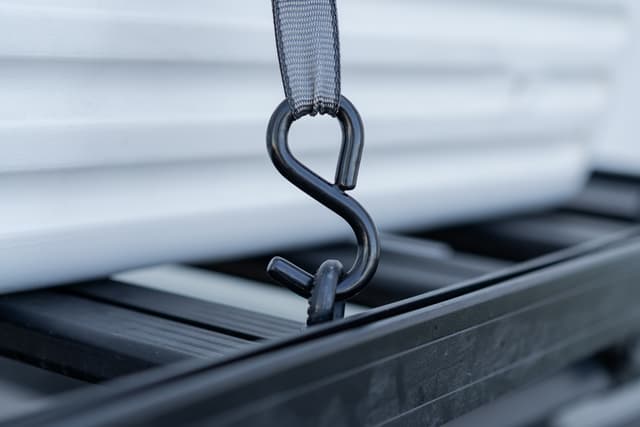
S-hooks are among the most common hook styles found on consumer tie-down straps. They are useful for many lighter-duty securement applications, but Keeper does not recommend S-hooks for loads over 1,000 lbs.
Best For
- Rated anchor points that accept an open S-hook
- Lighter-duty loads up to 1,000 lbs.
- Common pickup truck and utility trailer anchor points
- Applications where the hook can seat fully without twisting or side loading
Advantages
- Fast and easy to connect
- Slim profile fits many common anchor points
- Good option when the load and anchor point are appropriate for an S-hook
Many Keeper ratchet straps feature vinyl-coated S-hooks, which help reduce scratching or marring where the hook contacts any exposed surface.
Things to Watch:
Because standard S-hooks have an open design, they can become unseated if the strap goes slack during transport. That's why many of our Keeper products feature a "keeper" clip, or safety clip, to ensure the s-hook stays attached to your anchor point even if the strap goes slack. This is especially helpful when attaching or un-attaching the hook at the beginning or end of loading your cargo.
Always keep straps properly tensioned and periodically check them during longer trips.
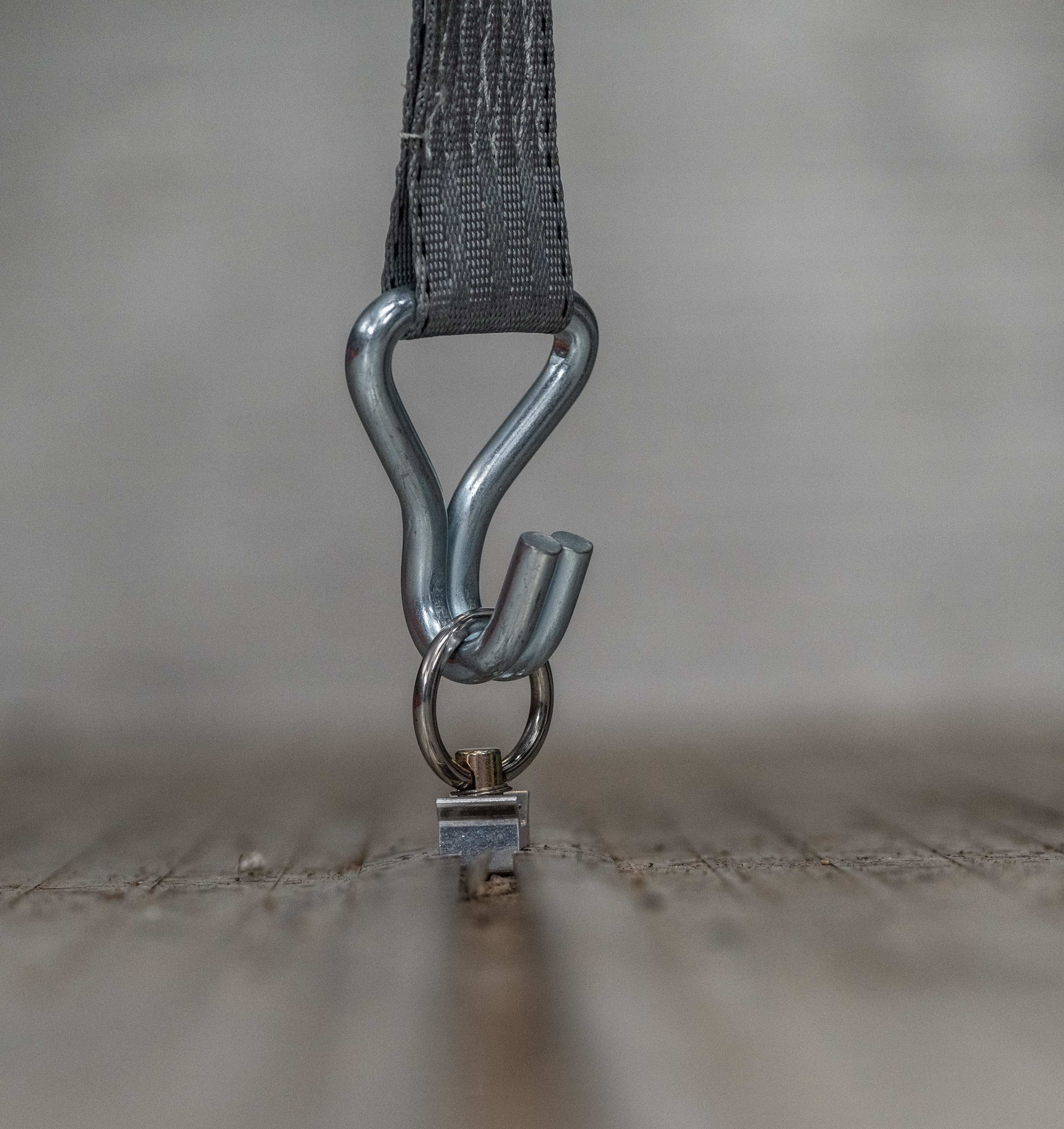
Double J-Hooks
Double J-hooks feature a deeper, heavier-duty profile and are Keeper's strongest option among the hook types covered in this guide. They are a strong choice when both the load and anchor point call for heavy-duty securement. JJ-hooks can come in multiple sizes, so be sure to always check the working load limit of the product you're using and that it's appropriate for your cargo.
Best For
- Heavy-duty trailer and equipment anchor points
- Heavy-duty or commercial loads exceeding a working load limit of 1,000lbs.
- Anchor points that accommodate the deeper JJ-hook profile
- Applications requiring a stronger hook connection
Advantages
- Larger contact area versus s-hooks
- Secure engagement with many trailer anchor points
- Strongest of the heavy-duty hook options discussed here
For heavier loads, JJ-hooks provide a strong connection when the anchor point is designed to accept their deeper profile. Some of Keeper's JJ-hook options have a "keeper" clip, or safety clip, affixed to them. This can help offer peace of mind that your hook won't fall off if the webbing goes slack, especially when loading or unloading your cargo.
Flat Hooks
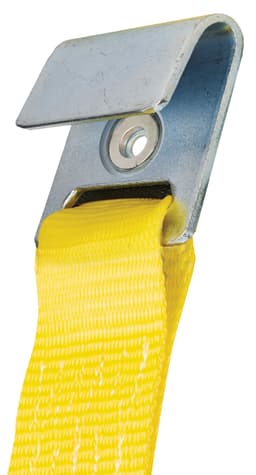
Flat hooks are heavy-duty hooks commonly used with flatbed trailers, rub rails, and commercial transport equipment. They provide a broad contact surface and are well suited to strong, flat attachment points.
Best For
- Flatbed trailers
- Heavy-duty flat or rail-style anchor points
- Commercial trailer applications
- Heavy-duty loads when the anchor point is designed for a flat hook
Advantages
- Broad contact surface distributes load
- Designed for heavy-duty trailer applications
- Good heavy-duty option; Double J-hooks provide greater hook strength when the anchor point accepts them
When attaching a flat hook to a trailer with rub rails, be sure to position the hook between the two metal strips of the rail—not on the outside edge, where the hook can be exposed to impact or get knocked during transport.
Magnetic Hooks
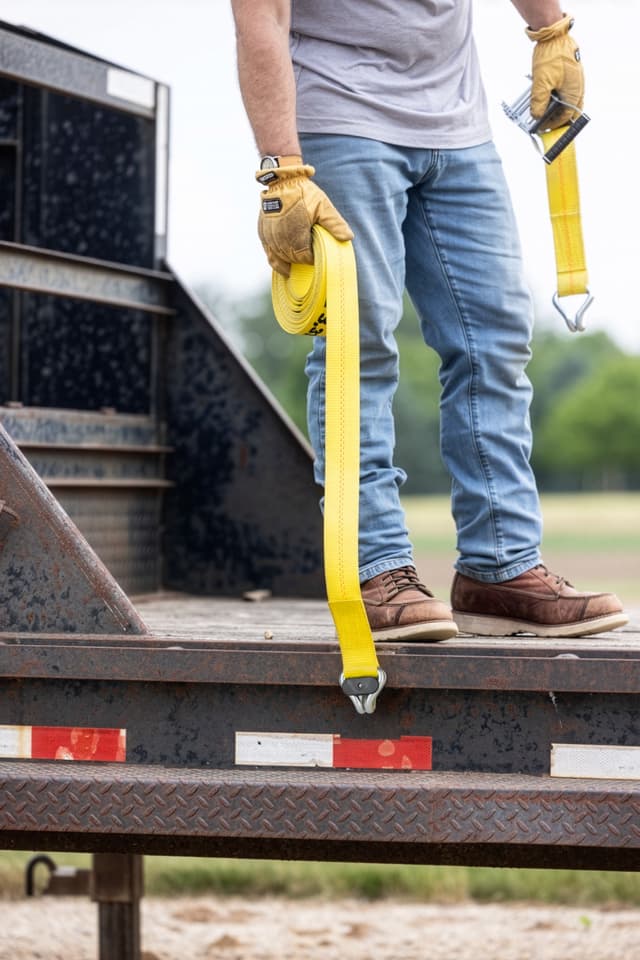
Keeper's Magnetic Hook is a loading-assist feature that helps hold a compatible hook in place on a steel surface while you position and tighten the strap. Keeper offers magnet accessories for S-Hooks, JJ-Hooks, and Flat Hooks – all in various sizes and strength ratings. The magnet does not determine the hook's load capability; rather, hook strength and anchor-point fit still drive selection.
Best For
- Steel surfaces near a suitable rated anchor point
- Single-person loading
- Situations where temporarily holding the hook in position makes setup easier
- Use only when the underlying hook style and tie-down rating are appropriate for the load and anchor point
Advantages
- Helps keep hooks where you place them while loading
- Reduces frustration of the hook falling off or loose during setup
- Makes it easier to position straps before tightening
The magnetic feature is especially useful when loading alone because it can temporarily hold the hook where you place it while you work from the other side of the load.
Soft Loops
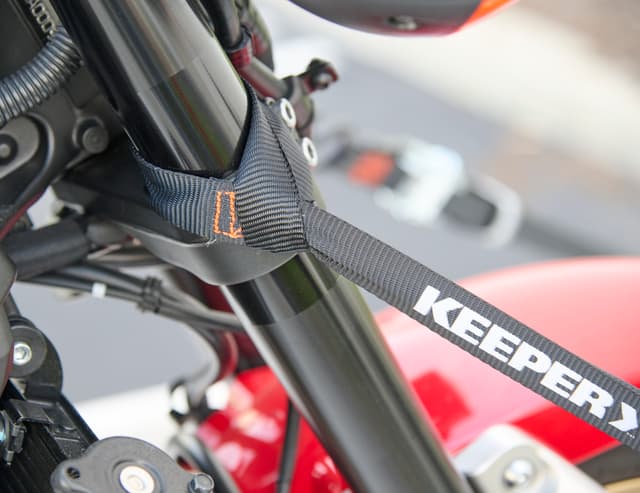
Soft loops are not hooks, but they are useful tie-down accessories when you need to create a secure attachment point or extend access to an anchor point that is difficult to reach with a hook. Soft loops often come sold as a separate accessory, or sometimes built-in to the product itself.
Best For
- Creating an attachment point where a hook cannot connect directly
- Reaching recessed or hard-to-access anchor points
- Providing extra flexibility around an appropriate structural attachment point
Advantages
- Creates a usable connection point for a tie-down hook
- Adds flexibility without forcing a hook into an unsuitable position
- Useful when the existing anchor point is difficult to access
Always use a soft loop that is appropriately rated for the load and attach it only to a suitable securement point.
Matching Hook Types to Anchor Points and Applications
Use the load weight and available anchor point—not the type of cargo—as the starting point for hook selection:
| Anchor Point/Application | Recommended Hook Type | Recommended Keeper Product |
|---|---|---|
| Common rated anchor point; load is 1,000 lbs. or less | S-Hook | 1-1/4" x 8' Cam Buckle Tie-Down, 47110 |
| Heavy-duty rated anchor point that accepts a deeper hook profile | Double J-Hook | 1.25" x 16' Camo Ratchet Tie-Down with Open Handle, 47322 |
| Heavy-duty flatbed or commercial trailer anchor point | Flat Hook or Double J-Hook, depending on anchor-point design | 2" x 27' Heavy-Duty Ratchet Strap Tie-Down, 04622 |
| Flatbed trailer rub rail | Flat Hook — place between the two metal strips of the rub rail, not on the outside edge | 2" x 27' Ratchet Tie-Down with Flat Hooks, 04623 |
| Anchor point is recessed, difficult to reach, or needs a flexible extension point | Soft Loop used with an appropriate hook | Ratchet Tie-Down Bundle, 30059 |
| Steel surface where temporary hook retention helps during setup/loading | Magnetic Hook feature, provided the underlying hook style is appropriate for the load and anchor point | 2" x 27' HEAVY-DUTY RATCHET STRAP TIE-DOWN W/ MAGNETIC JJ HOOK, 82827 |
Always confirm that the tie-down's Working Load Limit is appropriate for the load, then choose a hook that matches that duty level and fits the available anchor point securely without forcing, twisting, or side loading the hardware.
Don't Forget the Anchor Points
A hook is only as secure as the anchor point it's connected to.
Before every trip:
- Use only manufacturer-approved tie-down points.
- Inspect anchor points for damage, corrosion, or excessive wear.
- Ensure the hook is fully seated before tightening.
- Avoid connecting multiple hooks together unless specifically allowed by the manufacturer.
- Never attach hooks to components that aren't designed for cargo securement.
A properly connected hook should sit naturally in the anchor point without twisting or carrying the load on its tip.
Inspect Your Hooks Before Every Haul
Just like webbing and ratchets, hooks should be inspected before each use.
Replace the tie-down if you notice:
- Bent hooks
- Cracks
- Excessive corrosion
- Deep wear grooves
- Broken safety latches (if equipped)
Never attempt to bend a damaged hook back into shape. Once the metal has been deformed, its original strength may be compromised.
The Right Hook Makes Every Haul Easier
Choosing the right tie-down starts with the correct Working Load Limit, then the right hook for the load and the anchor point available.
The same cargo can require a different hook depending on how heavy the load is and what rated anchor points are available on the vehicle or trailer. Start with the load requirement, then choose the hook that fits the anchor point correctly.
Keeper offers tie-down solutions with hook styles designed for different duty levels and anchor-point configurations, helping users build a secure connection for the job at hand.
Because when every connection matters, the right hook is just as important as the right strap.