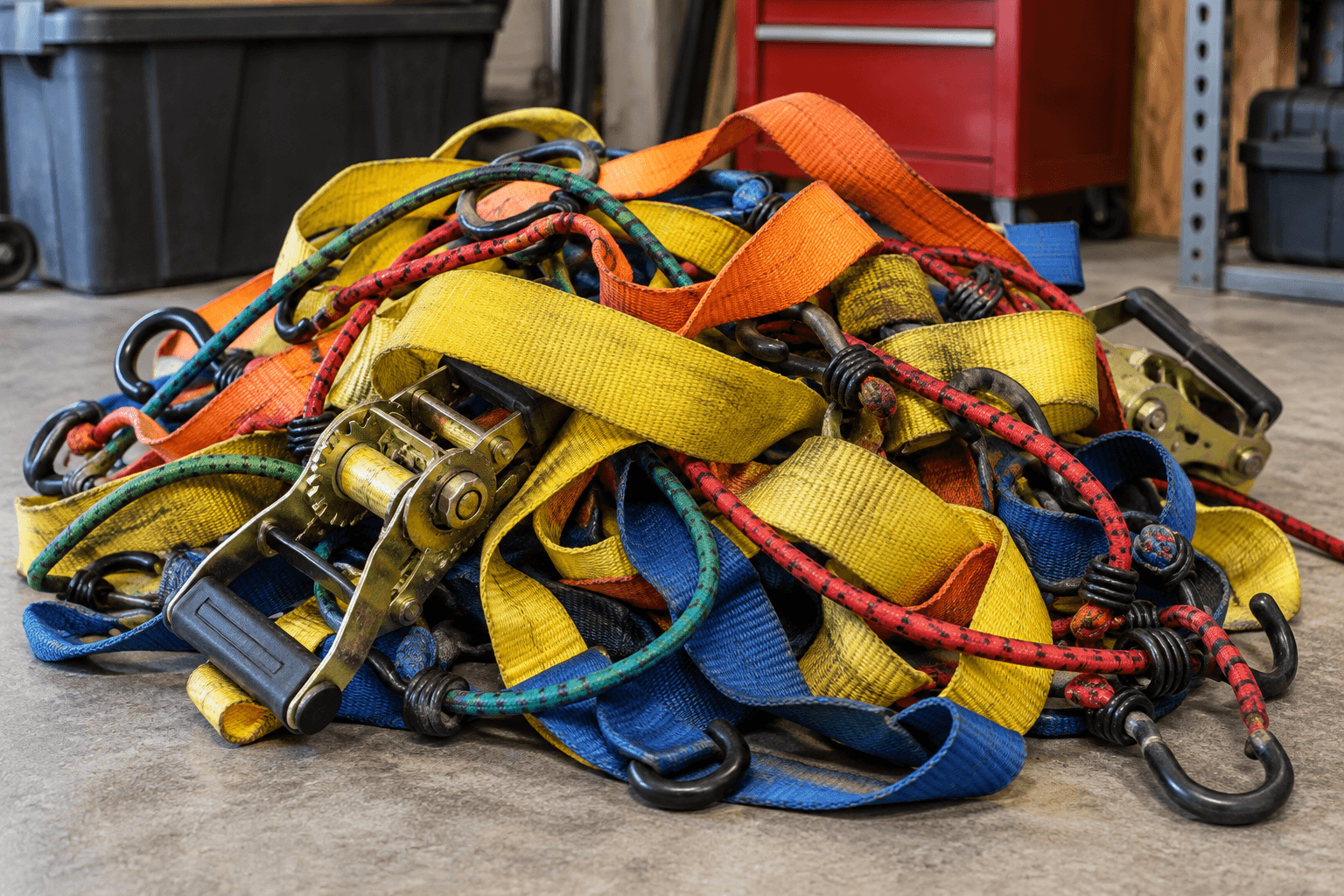
How to Keep Straps From Tangling in Your Truck Bed or Garage
09/23/26
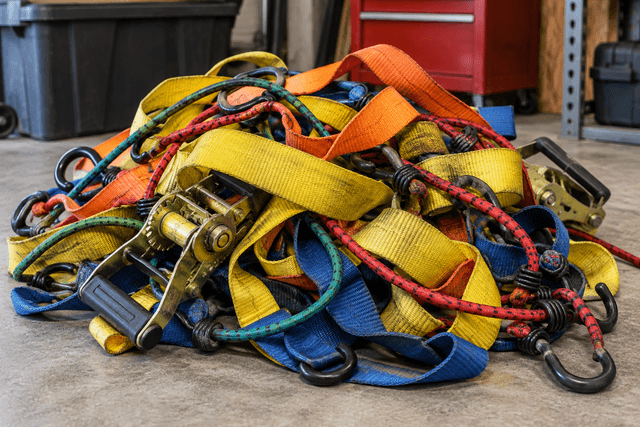
The best way to keep tie-down straps from tangling is to clean and dry them after use, roll or bundle each strap individually, secure the loose webbing, and store the straps in a dry, protected location. For frequent use, retractable tie-downs can make storage even easier because the webbing winds back into the housing instead of leaving several feet of loose strap to manage.
A simple storage routine doesn't just make your garage or truck bed more organized. It can also help protect tie-downs from unnecessary wear and make it easier to find the right strap when you're ready to haul.
Keeper provides this ratchet tie down kit created to support storage and organization: Ratchet Tie-Down Bundle, 30059
How Should You Store Ratchet Straps?
For traditional ratchet straps, follow these basic steps:
- Inspect the strap. Look for cuts, fraying, damaged stitching, bent hooks, corrosion, or other damage.
- Clean the strap. Remove dirt, sand, mud, and other debris.
- Let it dry. Never store a wet strap in a closed toolbox or container.
- Straighten the webbing. Remove twists and tangles before rolling.
- Roll the webbing tightly. Keep the strap compact rather than leaving it loose.
- Secure the bundle. Use a strap keeper, hook-and-loop wrap, or other suitable method to prevent the coil from unraveling.
- Store it somewhere dry and protected. A toolbox, storage compartment, cabinet, or storage bin can help protect the strap from unnecessary exposure to the elements.
This process takes less than a minute once it becomes a habit.
Why Do Tie-Down Straps Get Tangled?
Tie-downs become tangled primarily because of loose webbing and unsecured hardware.
A ratchet strap can contain several to dozens of feet of flexible webbing. When it's tossed into a truck bed, garage, or toolbox, that webbing can wrap around hooks, ratchets, other straps, or nearby equipment to get tangled very easily.
Common causes of tangling include:
- Throwing loose straps into a pile
- Leaving webbing unrolled after use
- Storing multiple straps together without bundling them
- Allowing hooks to catch on other straps
- Mixing different strap lengths and types in one container
- Storing straps with twists already in the webbing
The solution is simple: keep each strap contained from the time you finish using it until the next time you need it.
1. Inspect the Strap Before You Store It
Storage is a good time to perform your post-use inspection.
Check the entire length of the webbing for:
- Cuts
- Tears
- Excessive fraying
- Burned or melted areas
- Abrasion
- Brittle or heavily weathered webbing
- Damaged stitching
Then inspect the hardware for:
- Bent hooks
- Cracks
- Excessive rust or corrosion
- Damaged safety latches, if equipped
- Ratchet mechanisms that don't operate properly
Also check the product label. The Working Load Limit (WLL) and other product information should remain readable so you know what the strap is rated for the next time you use it.
If a strap has damage that could affect its safe use, throw it away rather than putting it back into storage. Plus, this gives you an excuse to go shopping for a brand-new Keeper strap!
2. Clean and Dry Your Tie-Downs
Tie-downs often come home with dirt, road grime, sand, or moisture from the day's haul.
Don't immediately throw them into a closed toolbox.
Instead:
- Shake or brush off loose dirt.
- Wipe away heavier debris when necessary.
- Allow wet straps to dry completely.
- Check the metal hardware for moisture or corrosion.
This is particularly important after hauling in rain, snow, mud, or near saltwater.
Dry storage helps protect both synthetic webbing and metal hardware from unnecessary deterioration.
3. Roll Ratchet Straps into a Compact Bundle
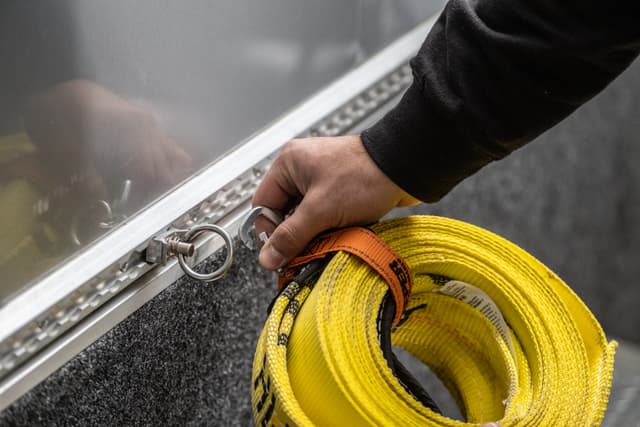
Once the strap is clean and dry, straighten the webbing and remove any twists.
Then roll the webbing into a compact coil.
A simple method is to start at the end opposite the ratchet and continue rolling the webbing toward the hardware. Keep the coil tight enough that it doesn't unravel, but don't kink or sharply fold the webbing.
Once rolled, secure the bundle with:
- A reusable strap keeper
- Hook-and-loop wrap
- A suitable reusable band like a Keeper bungee cord
Keep the hook positioned so it doesn't snag another strap.
What About the Ratchet?
For ratchet straps, keep the ratchet mechanism closed and contained with the bundled webbing. The objective is to prevent the metal hardware from catching on other equipment while the strap is stored.
4. Store Each Strap Separately
If you own several tie-downs, resist the temptation to throw them all into one large pile.
Bundle each strap individually.
This makes it easier to:
- Find the right strap
- Prevent tangles
- Inspect individual straps
- Keep hooks from catching on one another
- Quickly grab multiple straps when loading cargo
You can also organize straps by length, Working Load Limit, or application.
For example:
- Everyday hauling
- General-purpose ratchet straps
- Cam buckle straps
- Outdoor recreation
- Kayak and paddleboard tie-downs
- Bungee cords
- Heavy-duty hauling
- Higher-capacity ratchet straps
- Specialty tie-downs
The best organization system is the one that makes the correct strap easy to identify before every haul.
5. Consider Retractable Tie-Downs for Frequent Use
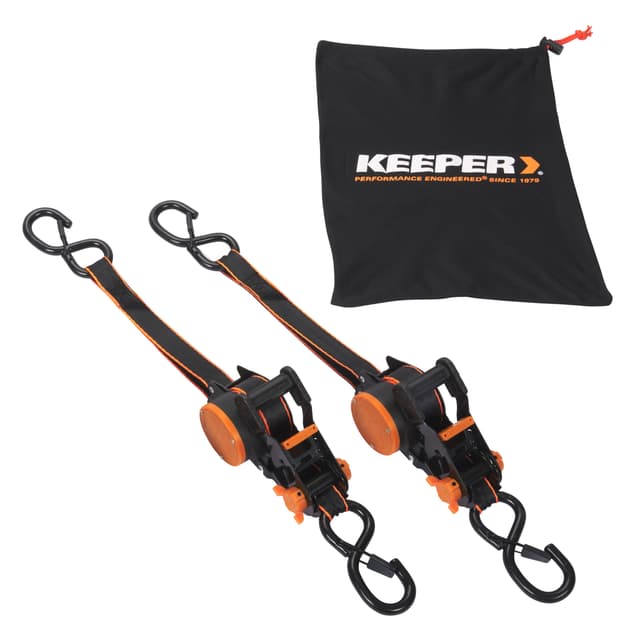
If loose webbing is your biggest frustration, a retractable tie-down can eliminate much of the problem. Keeper recommends this retractable tie-down: Retractable Ratchet Tie-Down, 1"x10', 43557
Unlike a traditional strap that needs to be manually rolled and bundled, a retractable design winds the webbing into its housing after use.
That makes retractable tie-downs particularly useful for applications where straps are used frequently, such as:
- Pickup truck beds
- Trailers
- Roof racks
- Utility vehicles
- Recreational equipment
- Regularly transported tools and equipment
Retractable vs. Traditional Ratchet Straps
| Feature | Traditional Ratchet Strap | Retractable Tie-Down |
|---|---|---|
| Loose webbing | Must be manually managed | Retracts into its housing like a seatbelt |
| Storage | Roll and bundle | Built-in storage |
| Setup | Manually position webbing | Quick to deploy |
| Best for | Heavy-duty and flexible applications | Frequent, convenient use |
| Organization | Requires storage routine | Easier to keep contained |
A retractable tie-down isn't automatically the right choice for every load. Choose the product based on its Working Load Limit and intended application first, then consider convenience and storage features.
6. Keep Straps Out of Direct Sun and Moisture When Possible
Tie-downs are designed for outdoor use, but prolonged exposure to harsh conditions can contribute to wear.
Whenever possible, store straps:
- In a dry location
- Out of direct sunlight
- Away from standing water
- Away from chemicals and corrosive materials
- In a protected truck-bed or trailer storage compartment
If you keep straps permanently in a truck or trailer, use a toolbox, storage compartment, or other protected area rather than leaving them loose and exposed.
UV exposure, moisture, dirt, and road chemicals can all contribute to premature wear.
7. Give Your Truck Bed or Garage a Dedicated Strap Zone
You don't need an elaborate storage system. A simple dedicated location can make a big difference.
In a Truck Bed
Consider storing straps in:
- A truck-bed toolbox
- A weather-resistant storage compartment
- A dedicated cargo organizer
Keep them away from loose tools and other equipment that could snag or damage the webbing.
In a Garage
Consider:
- Wall hooks
- Pegboards
- Storage bins
- Shelving
- A dedicated strap rack
Keep straps off the floor where they can collect dirt, get stepped on, or become tangled with other equipment.
In a Trailer
If your trailer has a protected storage compartment, make it the designated home for your tie-downs. This makes them easy to find when it's time to load.
8. Create a Grab-and-Go Hauling Kit
If you frequently transport the same types of equipment, organize everything you need into one kit.
For example, a recreational hauling kit might include:
- Appropriately rated tie-down straps
- Bungee cords
- Protective sleeves or padding
- Strap keepers
- Other accessories specific to your gear
A dedicated kit eliminates the "Where are my straps?" search before every weekend trip.
It also makes it easier to inspect your equipment because everything is stored together.
When Should You Replace a Tie-Down Strap?
Good storage can extend the useful life of a tie-down, but it can't restore a damaged strap.
Remove a tie-down from service if you find significant damage to the webbing, stitching, hooks, ratchet, or other load-bearing components.
Look for:
- Cuts or tears
- Excessive fraying
- Burned or melted webbing
- Damaged structural stitching
- Brittle or severely UV-damaged webbing
- Bent or cracked hooks
- Severe corrosion
- Damaged ratchet mechanisms
- Missing or unreadable product labels
Don't try to repair damaged load-bearing webbing or bend a damaged hook back into shape. Replace the tie-down according to the product manufacturer's recommendations.
The Best Storage Method Is the One You'll Actually Use
There's no complicated system required to keep tie-down straps organized.
For traditional ratchet and cam buckle straps, the formula is simple:
Inspect → Clean → Dry → Roll → Secure → Store
For people who use tie-downs frequently and want to eliminate loose webbing, retractable tie-downs offer another solution: deploy when you need them and retract when you're done.
Either way, better storage makes your straps easier to find, easier to use, and less likely to become tangled or damaged between hauls.
And when it's time to load up, you can spend less time untangling straps and more time getting your gear where it needs to go.
Keeper: Protect the gear you care about.