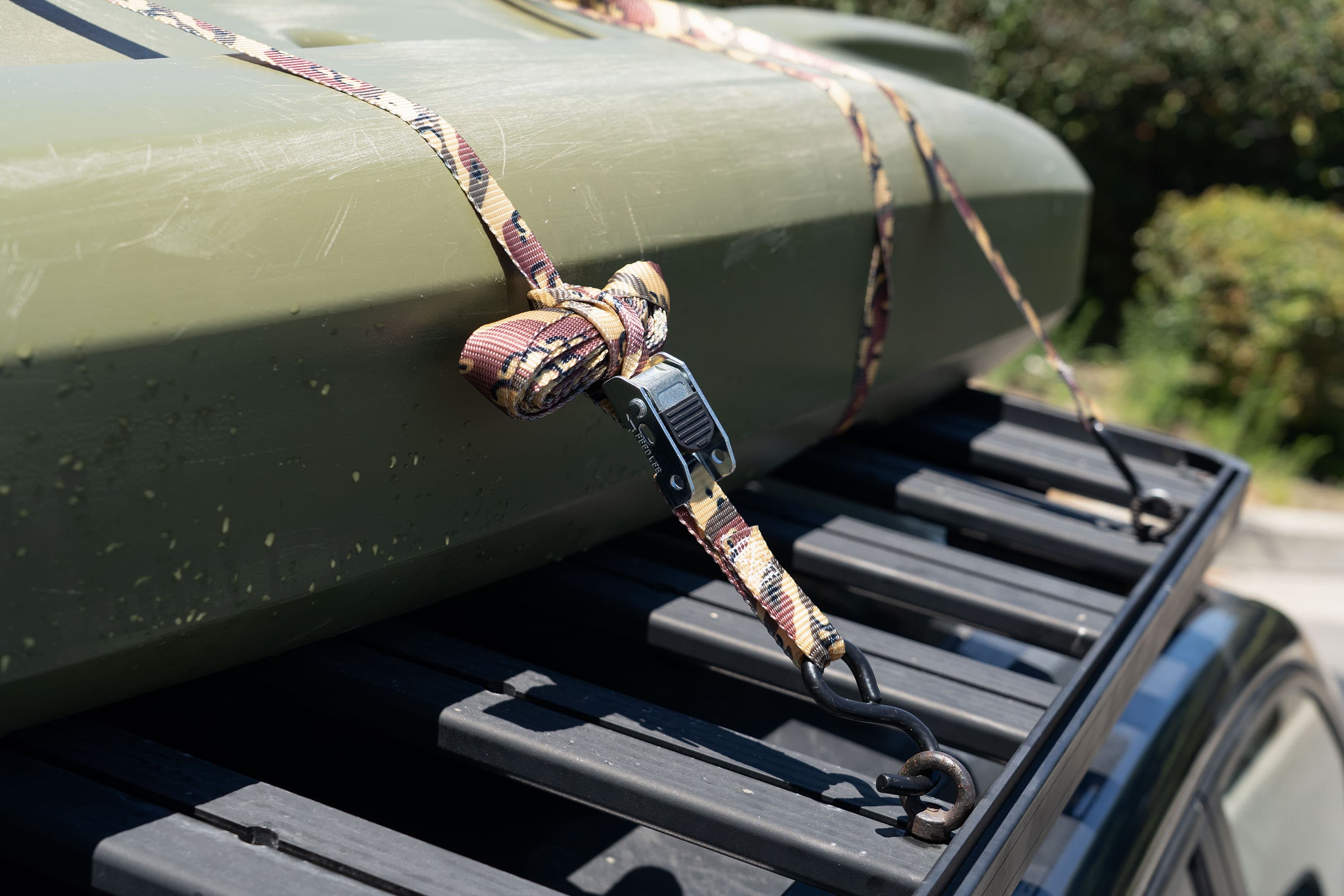
How to Secure a Kayak Without Scratching Your Car or Truck
09/23/26
A day on the water should begin with confidence — not worrying about whether your kayak will still be on your roof when you arrive, or worrying if your vehicle will end the trip covered in scratches.
Whether you're transporting a recreational kayak to a nearby lake or hauling a fishing kayak across the state, properly securing your boat protects both your gear and your vehicle. The right tie-down method helps prevent shifting during transport while reducing the risk of damage caused by overtightening, bare metal hardware, or poorly placed straps.
Here's how to safely transport your kayak while keeping both your kayak and your car or truck looking their best.
Key Takeaways:
- Start with the right transport setup on your vehicle
- Choose the right straps
- Position the straps correctly
Start with the Right Transport Setup
Before reaching for your tie-down straps, make sure your vehicle is equipped for the job.
On a Roof Rack
A quality roof rack is the ideal method for transporting most kayaks.
Depending on your setup, you may use:
- Crossbars
- J-style kayak carriers
- Saddle-style carriers
- Stackers (for transporting multiple kayaks)
These systems help distribute the kayak's weight and provide stable attachment points for your tie-down straps.
If your vehicle doesn't have a roof rack, avoid simply strapping the kayak directly to the roof unless you're using a transport system specifically designed for that purpose. Unsupported contact can damage both the vehicle and the kayak.
In a Truck Bed
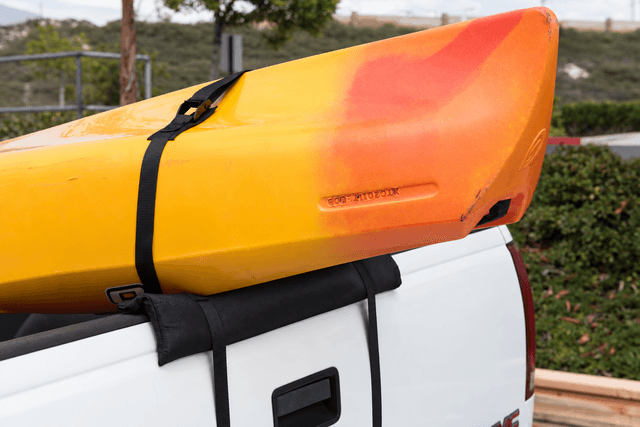
Pickup trucks offer another convenient option.
If the kayak fits entirely within the bed, secure it using the truck's built-in tie-down points.
For longer kayaks that extend beyond the tailgate:
- Use a bed extender if needed.
- Secure the kayak to prevent forward, backward, and side-to-side movement.
- Follow all applicable laws regarding loads that extend beyond the rear of the vehicle, including the use of warning flags or lights when required.
The goal is to keep the kayak stable without allowing it to bounce or shift during transport.
Choose the Right Straps
Not all tie-down straps are designed for the same job.
For kayaks, cam buckle straps are generally the preferred choice.
Why Cam Buckle Straps?
Cam buckle straps allow you to tighten the webbing by hand, giving you excellent control over the amount of tension applied.
Benefits include:
- Easy to tighten
- Less risk of overtightening
- Gentle on composite, fiberglass, and polyethylene kayaks
- Quick loading and unloading
For most recreational paddlers, cam buckle straps provide all the holding power needed when used correctly. Featured Keeper options include: 1" x16' Camo Cam Buckle Tie-Down, 47100
When to Use Ratchet Straps
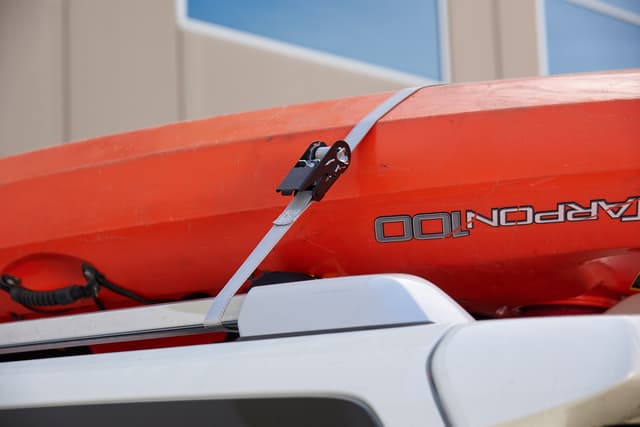
Ratchet straps generate much higher tension than cam buckle straps.
While they're excellent for securing heavy cargo such as ATVs, lawn equipment, and building materials, they require extra care when used with kayaks.
Improper use can:
- Crush or deform plastic hulls
- Damage fiberglass or composite boats
- Place unnecessary stress on roof rack systems
- Dent thin vehicle roof panels if no rack is used
If you choose to use ratchet straps for transporting a kayak, tighten them only enough to keep the kayak secure. Avoid excessive tension and always follow the strap manufacturer's instructions.
Position the Straps Correctly
Proper strap placement is just as important as selecting the right tie-down.
When transporting a kayak on a roof rack, route each strap over the kayak and around the roof rack crossbars or kayak carrier. On many kayaks, you can also pass the webbing through the carry handle to help keep the strap centered and reduce fore-and-aft movement—but the handle should never be the primary attachment point. The roof rack and crossbars should carry the load, while the straps hold the kayak firmly against them.
The straps should hold the kayak firmly against the rack while allowing the rack—not the straps—to support the boat's weight.
Always follow the recommendations provided by both your kayak manufacturer and your roof rack manufacturer, as attachment methods can vary depending on the design of your equipment.
Don't Forget Bow and Stern Lines
For longer kayaks or highway travel, bow and stern lines add valuable stability.
These lines help reduce:
- Forward movement during braking
- Rearward movement during acceleration
- Side-to-side shifting
- Lift caused by crosswinds
Attach the lines to designated attachment points on your vehicle whenever possible.
The lines should be snug but not overly tight. Their purpose is to stabilize the kayak—not to pull it down onto the roof.
Protect Your Kayak—and Your Vehicle
Many scratches occur before the straps are ever tightened.
As you're loading:
- Lift the kayak rather than dragging it across the vehicle.
- Keep metal buckles away from painted surfaces.
- Use buckle covers or simply wrap the buckle in a soft towel during transport.
- Make sure hooks and hardware cannot swing against the vehicle while driving.
If your roof rack or carrier requires padding, inspect it regularly for wear and replace it when necessary.
Use Padding at Contact Points
Padding helps distribute pressure while protecting both the kayak and your vehicle.
Depending on your transport system, this may include:
- Foam blocks
- Rubber saddle pads
- J-cradle padding
- Protective pads on crossbars
Padding also reduces friction that can wear on the kayak during long trips.
Watch for Crosswinds
Highway speeds and crosswinds place additional stress on both the kayak and your tie-down system.
Before driving:
- Confirm all straps are properly tensioned.
- Check that loose strap ends are tied off so they don't flap in the wind.
- Verify bow and stern lines are secure.
- Make sure the kayak cannot rock excessively.
During longer trips, stop after the first few miles to inspect your tie-downs, then check them periodically throughout your journey. Wind, road vibration, and the natural settling of the load can reduce strap tension over time.
Avoid These Common Mistakes
Many transport problems result from a few avoidable errors.
Overtightening the Straps
More tension doesn't always mean more security.
Excessive force can deform plastic hulls, crack composite kayaks, or put unnecessary stress on your roof rack.
Tighten only enough to hold the kayak securely without compressing or distorting the hull.
Letting Metal Hardware Contact the Vehicle
Ratchet handles, cam buckles, and hooks can swing during transport if they're left unsecured.
Position buckles away from painted surfaces and secure loose hardware before driving.
Twisted Straps
A flat strap distributes pressure more evenly and is less likely to loosen during transport.
Remove twists before tightening.
Skipping the Final Check
Before pulling away, walk around the vehicle and perform one final inspection.
As part of Keeper's Tap the Strap™ routine:
- Verify the kayak is centered.
- Check that each strap is properly tensioned.
- Confirm bow and stern lines are secure.
- Make sure buckles and hardware are clear of painted surfaces.
- Ensure loose strap ends are tied off.
That quick walk-around only takes a minute and can help prevent problems once you're on the road.
Protect the Gear You Care About
Your kayak is an investment in adventure, and getting it to the water safely starts with the right cargo securement practices.
Using a quality roof rack or truck bed setup, choosing the appropriate tie-down straps, protecting contact points, and avoiding overtightening all help prevent unnecessary damage to both your kayak and your vehicle.
Whether you're headed to a nearby lake for the afternoon or embarking on a weekend paddling trip, taking a few extra minutes to secure your kayak properly means you can spend less time worrying about the drive—and more time enjoying the water.
Because at Keeper, we believe in helping you protect the gear you care about.