How to Secure an ATV or UTV to a Trailer: A Complete Tie-Down Guide
09/23/26
Whether you're heading to the trails, the hunting property, the jobsite, or the dunes, one thing should never be left to chance: keeping your ATV or UTV securely attached to your trailer.
Improperly tied down equipment isn't just an expensive mistake — it can become a serious safety hazard. The good news is that securing your powersports vehicle correctly doesn't require complicated equipment. It simply requires the right tie-downs, the proper technique, and a few minutes of preparation before every trip.
In this guide, we'll walk through exactly how to secure an ATV or UTV to a trailer, explain the difference between frame and over-the-tire tie-down methods, discuss working load limits, and cover the most common mistakes that can lead to cargo failure.
Quick Answer: How to Secure an ATV or UTV to a Trailer
- Use appropriately rated tie-downs. Choose heavy-duty ratchet straps and trailer anchor points rated for the weight of your ATV or UTV.
- Secure to approved attachment points. Use manufacturer-approved frame or structural tie-down points, or an appropriate over-the-tire securement system. Avoid plastic panels, steering components, cargo racks, and other points not designed for tie-down use.
- Control movement in every direction. Position and angle your tie-downs to prevent forward, backward, side-to-side, and upward movement during transport.
- Check the Working Load Limit (WLL). Use the strap's WLL—not its breaking strength—to select the appropriate tie-downs. The combined WLL should meet or exceed the weight of the vehicle being secured and comply with applicable securement requirements.
- Inspect before and during your trip. Make sure straps, hooks, ratchets, and anchor points are properly positioned and secure before leaving. Stop after the first few miles to recheck tension and inspect periodically on longer trips.
Why Proper ATV and UTV Securement Matters
ATVs and UTVs experience constant movement while being transported. Every bump, pothole, hard brake, or sharp turn places stress on your tie-down system.
Improperly secured vehicles can:
- Shift on the trailer
- Loosen straps during transit
- Damage suspension components
- Cause expensive vehicle damage
- Create dangerous road hazards
Using high-quality ratchet straps and following proper cargo securement practices helps ensure your vehicle arrives exactly as it left.
Before You Begin: Choose the Right Equipment
Before loading your ATV or UTV, inspect all of your equipment.
You'll need:
- Heavy-duty ratchet tie-downs
- Trailer anchor points rated for the load
- Soft loops (when appropriate)
- Wheel chocks (recommended)
- Gloves for safer handling
Always inspect straps for:
- Cuts or fraying
- Burn marks
- Broken stitching
- Bent or damaged hooks
- Corrosion on hardware
If any component shows significant wear, replace it before transporting your vehicle.
Step 1: Position the Vehicle Correctly
Drive the ATV or UTV onto the trailer slowly.
Position it so:
- Weight is balanced front to rear
- Trailer tongue weight remains within manufacturer recommendations
- Tires sit centered between trailer rails
- Parking brake is engaged
For your safety, use wheel chocks or tire stops.
Proper vehicle placement makes the rest of the securement process much easier.
Step 2: Choose Your Tie-Down Method
There are two primary ways to secure an ATV or UTV.
Option 1: Tying Down the Frame
Tying down the frame attaches ratchet straps directly to structural components of the vehicle.
Common attachment points include:
- Frame rails
- Factory tow points
- Suspension mounting locations specifically approved by the manufacturer
Avoid attaching straps to:
- Plastic body panels
- Handlebars (unless manufacturer recommends)
- Steering components
- Cargo racks
- Brake lines
- Axles not intended for tie-down use
Frame tie-downs slightly compress the suspension to reduce movement during transport.
This is the most common method used for ATVs.
Option 2: Over-the-Tire Tie-Downs
Instead of securing the frame, over-the-tire systems hold the vehicle by wrapping straps over each tire.
Benefits include:
- Minimal suspension compression
- Reduced stress on suspension components
- Excellent stability during long-distance transport
- Consistent strap tension even over rough roads
This method has become increasingly popular for larger UTVs and side-by-sides because it allows the suspension to move independently while the tires remain firmly planted on the trailer.
Step 3: Attach the Front Straps
No matter which option you chose above, start with the front of the vehicle.
If you're using Option 1:
Attach one strap to each side of the frame or approved anchor point.
Then connect each strap to trailer anchor points positioned slightly forward and outward.
The straps should create a wide "V" shape.
This angle helps prevent side-to-side movement while also resisting forward motion during braking.
Avoid straps that run perfectly vertical or perfectly straight.
Proper angles create much greater stability.
Step 4: Secure the Rear
Repeat the process at the rear.
Rear straps should angle backward and outward from the vehicle to the trailer anchor points.
Together, all four straps should hold the vehicle in every direction:
- Forward
- Backward
- Left
- Right
- Upward
The goal is to eliminate movement without overtightening.
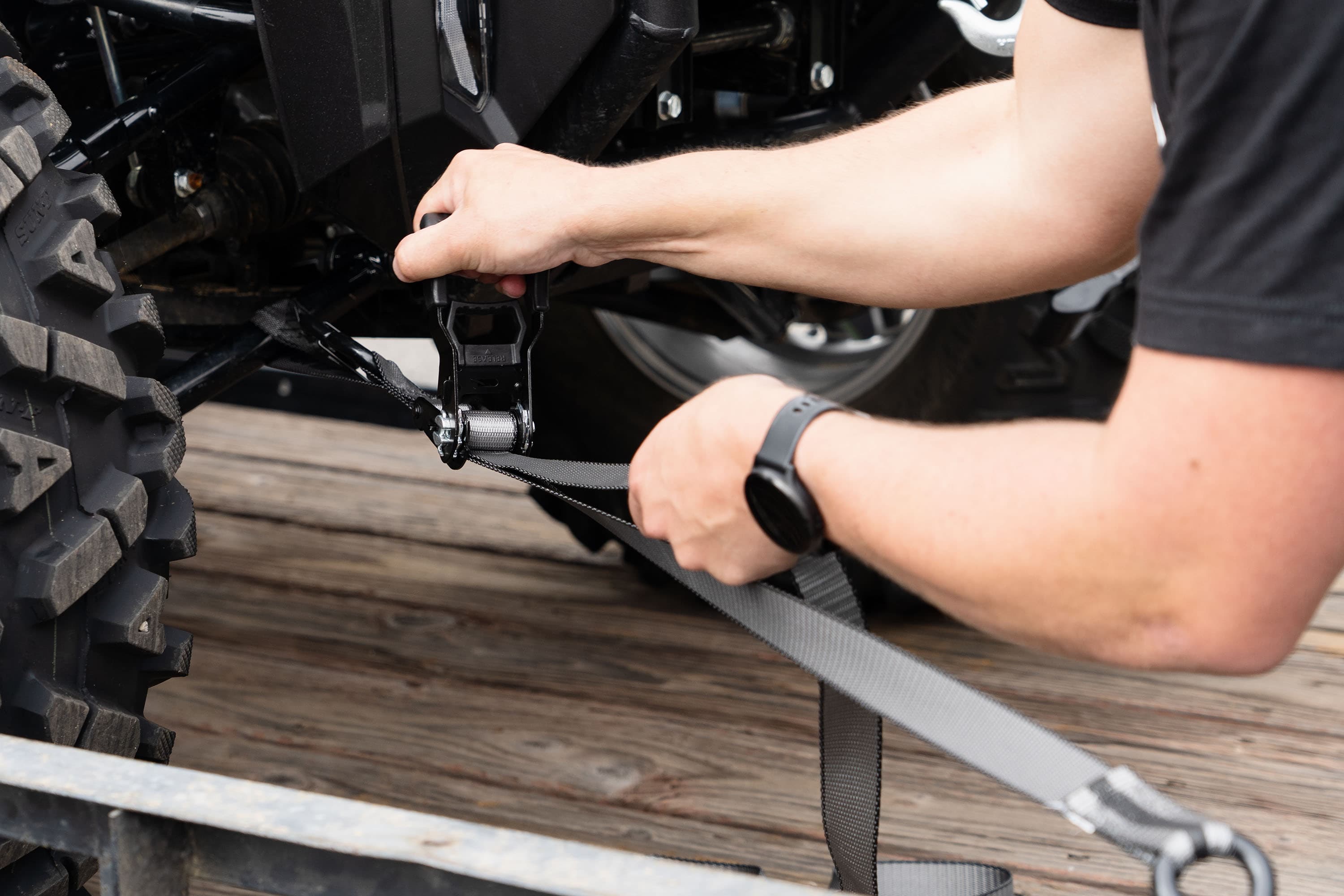
Step 5: Tighten the Ratchet Straps
Using the ratchet mechanism, tighten each strap evenly.
For frame tie-downs:
Compress the suspension slightly—but don't bottom it out.
Over-compressing the suspension can place unnecessary stress on shocks, springs, and tie-down points.
For over-the-tire systems:
Tighten until the tires are firmly seated against the trailer deck without excessive force.
Keeper Innovations that Make Securing Your ATV or UTV Even Better
Make Securement Faster, Easier and Hassle-Free
One of the biggest reasons people skip proper cargo securement is that traditional ratchet straps can be frustrating to use. Twisted webbing, tangled straps, and time spent feeding long lengths of strap through the ratchet all add up—especially when you're loading up after a long day on the trail.
Innovations like Keeper® KwikFeed™ ratchet tie-downs simplify the process by allowing the webbing to feed into the ratchet at any point along its length into the patented slotted KwikFeed™ drum. This allows you to start ratcheting more quickly and with less hassle, making it easier for the novice and even faster for the pro. Faster setup means you're more likely to secure your ATV or UTV correctly every time you hit the road.
One of the most common frustrations during loading is keeping hooks in place while routing the strap. Keeper® Magnet Hook technology helps hold the hook securely against steel trailer surfaces, making it easier to position your straps before tensioning them. This can save time and reduce the need to reposition hooks while working alone.
ATVs and UTVs often travel in harsh environments—mud, sand, rocks, dust, and repeated loading can all wear down tie-down webbing over time.
For frequent powersports users, tie-downs featuring Keeper® Extreme Edge™ webbing provide increased resistance to abrasion and cuts compared to standard webbing. This added durability is especially valuable when hauling over long distances or when straps come into contact with rough trailer surfaces.
Understanding Working Load Limits (WLL)
One of the most overlooked parts of cargo securement is selecting straps with adequate strength.
Every tie-down strap includes two important ratings:
- Working Load Limit (WLL)
- The maximum load the strap is designed to safely secure during normal use.
- Breaking Strength
- The amount of force required to cause failure under laboratory testing.
For cargo securement, always use the Working Load Limit—not the breaking strength. This is determined by a Safety Factor, which is commonly 3X in the tie down industry. Dividing the Breaking Strength by the Safety Factor determines your Working Load Limit.
As a general rule, the combined Working Load Limits of your tie-downs must meet or exceed the weight of the cargo being secured, while also complying with applicable cargo securement regulations.
Using oversized, high-quality ratchet straps provides an additional margin of confidence for heavier machines.
Perform a Final Safety Check
Before driving away, inspect every connection.
Confirm that:
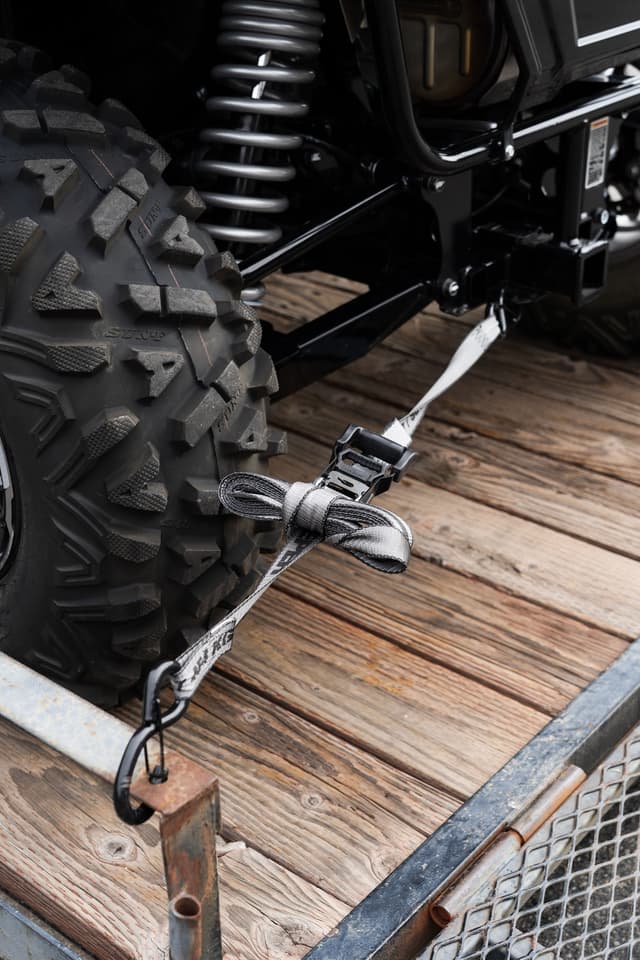
- Ratchets are fully locked
- Hooks are completely seated
- Straps aren't excessively twisted
- Excess webbing is secured so it won't flap in the wind
- Nothing contacts sharp edges
- The vehicle doesn't move when pushed firmly by hand
After driving the first 5–10 miles, stop and recheck strap tension. Check again after every 50 miles.
It's common for straps to settle slightly once the vehicle has shifted into its final position.
Common ATV and UTV Tie-Down Mistakes
Avoid these common errors:
- Using worn or damaged straps
- Frayed webbing or damaged hardware significantly reduces strength.
- Connecting hooks to weak attachment points
- Plastic racks, steering components, or decorative accessories are not designed to support securement of loads.
- Overtightening the suspension
More tension isn't always better.
Excessive compression can damage suspension components and actually reduce securement effectiveness.
- Using incorrect strap angles
- Straight vertical straps provide less resistance to movement than properly angled tie-downs.
- Ignoring Working Load Limits
Never assume any ratchet strap is strong enough simply because it "fits."
Always verify the rating.
- Skipping the recheck
Road vibration can slightly loosen newly installed straps.
A quick stop early in your trip provides peace of mind and keeps you and everyone else on the road around you safe.
- Letting straps drag on the ground
- Allowing straps to drag during loading and hauling can introduce dirt, gravel, and abrasion that shortens their lifespan. Keeping webbing clean, properly stored, and using more abrasion-resistant materials helps extend the life of your tie-downs.
How Securement Differs for Other Powersports Vehicles
While the basic principles remain the same, different vehicles often require different techniques.
ATVs
Frame tie-downs are the most common approach.
Slight suspension compression helps minimize movement during transport.
UTVs (Side-by-Sides)
Because of their larger size and independent suspension systems, many owners prefer over-the-tire tie-down systems.
Frame securement also works when proper anchor points are available.
Motorcycles
Motorcycles require a different approach.
The front wheel is typically secured in a wheel chock while straps attach to the handlebars or triple tree using soft loops. Rear stabilization straps help prevent side-to-side movement.
Dirt Bikes
Dirt bikes are lighter but have long-travel suspension.
Tie-downs should compress the suspension enough to stabilize the bike without placing excessive stress on forks or seals.
Choose Quality Tie-Downs You Can Trust
Your ATV or UTV is built for adventure. Getting it there safely starts with dependable cargo securement.
Keeper® ratchet tie-downs are engineered for strength, durability, and confidence on the road. Features like abrasion-resistant webbing, ergonomic ratchets, and high-strength hooks help provide reliable performance trip after trip, whether you're hauling gear to the trails for the weekend or transporting equipment for work.
When every mile matters, trust your cargo with tie-downs that are built to perform.
Frequently Asked Questions
- Is it better to tie down an ATV by the frame or the tires?
- Both methods are effective when done correctly. Frame tie-downs are commonly used for ATVs, while over-the-tire systems are increasingly popular for larger UTVs because they allow the suspension to move naturally during transport.
- How many ratchet straps do I need?
- Most ATVs and UTVs should be secured with at least four appropriately rated tie-downs—one at each corner. Always follow your vehicle and trailer manufacturer's recommendations.
- Should I compress the suspension?
- With frame tie-downs, slight suspension compression helps reduce movement. Avoid fully compressing the suspension. Over-the-tire systems typically do not require suspension compression.
- How tight should ratchet straps be?
- The vehicle should not shift or rock on the trailer, but the straps should not be overtightened to the point of stressing suspension components or damaging the vehicle.
- Should I check the straps during the trip?
- Yes. Stop after the first few miles to verify that all straps remain tight and properly positioned. Recheck them periodically during longer trips.