Working Load Limit vs. Break Strength: What's the Difference?
09/23/26
When you're shopping for ratchet straps or tie-downs, it's easy to assume that the biggest number on the package tells you everything you need to know. A strap labeled 5,000 lbs. certainly sounds stronger than one labeled 3,300 lbs.—but that number may not mean what you think it does.
The truth is, break strength and working load limit (WLL) are two very different measurements, and understanding the difference is one of the most important steps in choosing the right cargo securement equipment.
Whether you're hauling furniture, landscaping equipment, building materials, or powersports vehicles, selecting a tie-down based on the correct rating helps keep your cargo secure and promotes safer transportation.
Key Takeaway
When choosing a tie-down for normal cargo securement, use the Working Load Limit (WLL)—not the break strength—as your selection number. WLL represents the maximum load the tie-down is designed to handle during normal use and includes an appropriate safety margin. Break strength represents the point at which the tie-down fails under laboratory testing and should not be used to determine how much cargo a tie-down can safely secure.
What Is Break Strength?
Break strength (sometimes called "minimum breaking strength") is the amount of force a strap can withstand before it fails during laboratory testing.
Think of it as the absolute maximum load the strap can tolerate under ideal testing conditions before it breaks.
For example:
- A ratchet strap may have a 5,000 lb. break strength
- Under controlled testing, the strap will withstand at least that amount of force before failure
This number is important because it demonstrates the overall strength of the materials used to manufacture the strap.
However, break strength is not the weight you should use when selecting a tie-down.
What Is Working Load Limit (WLL)?
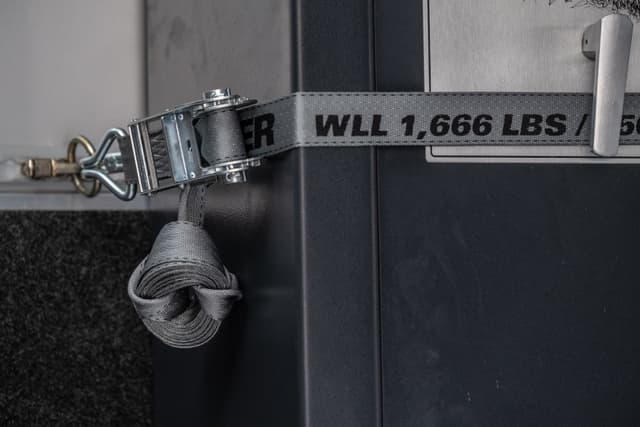
The Working Load Limit (WLL) is the maximum load that should be applied during normal use.
Rather than representing the point where a strap fails, WLL provides a safe operating limit that includes an appropriate safety margin.
For example:
| Rating | Meaning |
|---|---|
| Break Strength | 5,000 lbs. |
| Working Load Limit | 1,667 lbs. |
In this example, the strap is designed to safely secure up to 1,667 pounds during normal use, even though laboratory testing shows it can withstand considerably more before breaking.
When choosing a tie-down, always use the Working Load Limit—not the break strength.
Why Is the Working Load Limit Lower?
Cargo doesn't stay perfectly still while you're driving.
Even carefully loaded cargo experiences:
- Sudden braking
- Acceleration
- Sharp turns
- Road vibration
- Bumps and potholes
- Wind forces
These dynamic forces place additional stress on tie-down equipment.
The Working Load Limit provides a safety margin that helps account for these real-world conditions instead of assuming perfectly steady loads.
That's why professional drivers, contractors, equipment operators, and cargo securement standards all rely on Working Load Limits when selecting tie-down equipment.
Don't Shop by the Biggest Number
Many consumers naturally compare packages using the largest number they see.
For example:
- Strap A: 5,000 lb. Break Strength
- Strap B: 1,667 lb. Working Load Limit
Without understanding the difference, someone might assume these products are rated very differently.
In reality, these numbers often describe the same strap.
The larger number refers to laboratory failure testing.
The smaller number is the safe operating capacity you should use when selecting a product.
When comparing tie-downs, always look for the Working Load Limit first.
A Simple Example
Let's say you're transporting a riding lawn mower that weighs approximately 1,200 pounds on a utility trailer.
If you use a ratchet strap with a Working Load Limit of 1,667 pounds, the strap is rated to safely contribute up to that amount during normal use. However, cargo securement depends on the combined Working Load Limit of all tie-downs used, the number and placement of those tie-downs, the trailer, and following the equipment manufacturer's instructions and applicable cargo securement requirements.
Rather than asking:
"Does one strap have a big enough break strength?"
Ask:
"Am I using enough properly rated tie-downs, installed correctly, to safely secure this load?"
That's the question that leads to safer cargo securement.
Understanding Safety Margins
It's tempting to think:
"If my strap won't break until 5,000 pounds, I should be able to secure 4,000 pounds."
That's not how cargo securement works.
Operating near the break strength leaves little room for:
- Shock loading
- Uneven force distribution
- Strap wear
- Abrasion
- Unexpected road conditions
- Improper loading angles
The Working Load Limit already factors in an appropriate safety margin for normal use. Exceeding it increases the risk of equipment failure and cargo movement.
Other Factors That Affect Strap Performance
Even a properly rated strap can perform poorly if it's used incorrectly.
Always inspect your equipment before every trip. Replace straps that show signs of:
- Cuts
- Fraying
- Burns
- Torn stitching
- Damaged hooks
- Bent or deformed hardware
- Ratchet mechanisms that no longer operate smoothly
Proper use also includes:
- Using designated vehicle or trailer anchor points
- Keeping webbing flat without twists
- Protecting straps from sharp edges
- Tightening the straps securely without over-tensioning
- Checking tension after driving a short distance and periodically during longer trips
Choosing the Right Keeper Tie-Down
Keeper offers tie-downs with clearly marked Working Load Limits so you can select equipment that matches your cargo and application.
| What Is Being Secured | Typical Working Load Limit | Keeper Product |
|---|---|---|
| Self-propelled lawn mower | <500 lbs | KwikFeed Ratchet Tie Down 1"x12' 500 lbs., 43570 |
| Motorcycles | <1,000 lbs | 1" x 8' High Tension Ratchet Tie-Down, 45721 |
| ATVs and UTVs | 1,000 – 2,000 lbs | 1.5" x 16' ExtremeEdge® Ratchet Tie-Down, 1600lbs. WLL, 43579 |
| Building materials | 500 – 1,000 lbs | 1-1/4" x 14' Side Loading Ratchet Tie-Down, 47227 |
| Furniture | Up to 1,000 lbs, Choose based on the weight and fragility of the item | 2" x 10' Cam Buckle Tie-Down with S hooks, 47309 |
| Appliances | <500 lbs | 1" x 12' Ratchet Tie-Down, 03518 |
| Recreational Gear – Kayaks & Canoes | <400 lbs | 1" x16' Camo Cam Buckle Tie-Down, 47100 |
Always begin by checking the Working Load Limit on the product label—not just the largest break strength number.
Different cargo types may require different strap widths, hardware styles, and quantities. Ratchet straps provide greater tension for heavier loads, while cam buckle straps are often better suited for lighter cargo that could be damaged by overtightening.
Read the Label Before You Load
Choosing the right tie-down isn't about finding the highest break strength on the shelf.
It's about selecting equipment with an appropriate Working Load Limit, using the correct number of tie-downs, inspecting your equipment before every trip, and following the product instructions and applicable cargo securement guidance.
Understanding the difference between Working Load Limit and break strength helps you make informed decisions, compare products more accurately, and transport your cargo with greater confidence.
Because when your cargo matters, the right rating matters too.