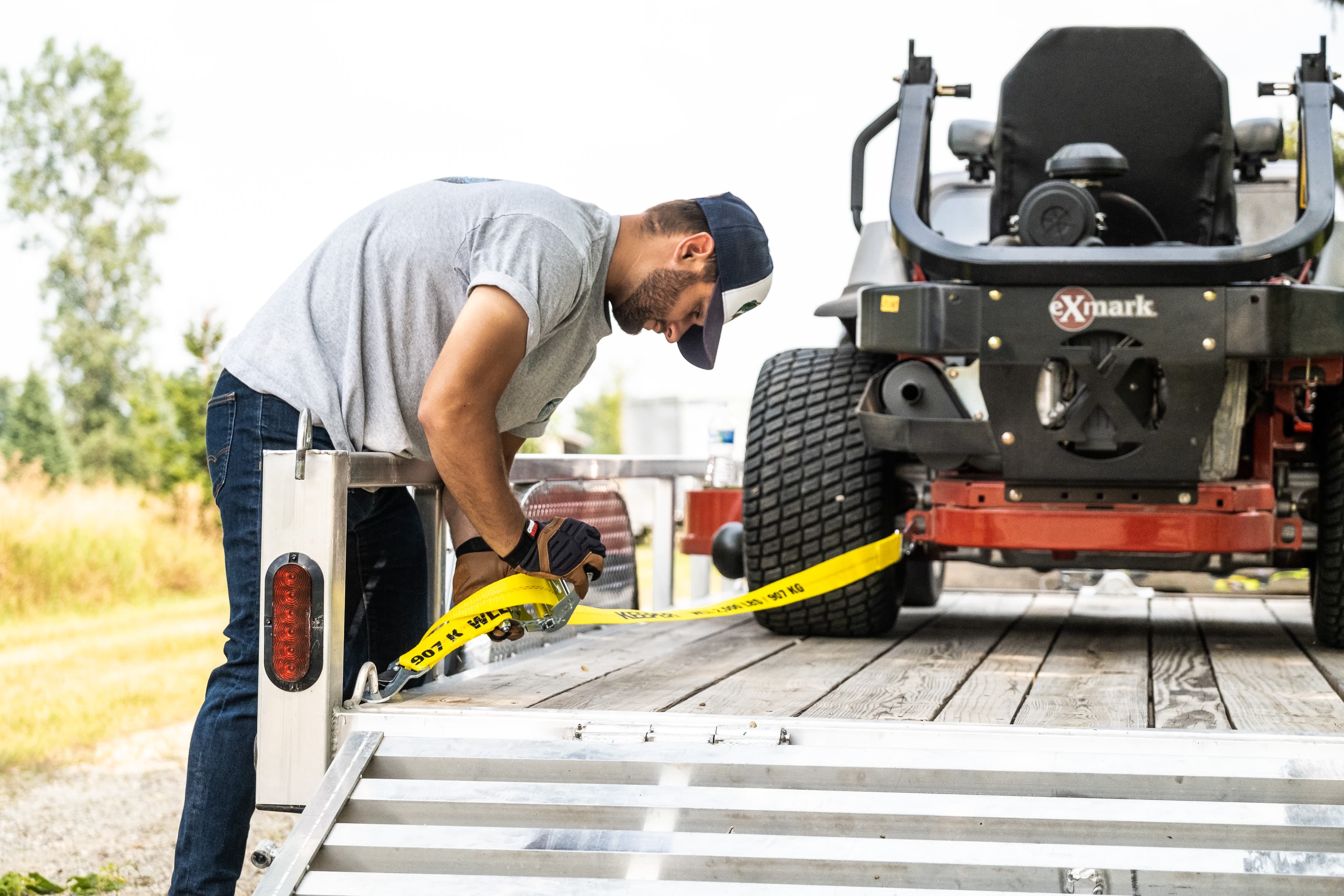
How to Secure a Lawnmower for Transport
09/23/26
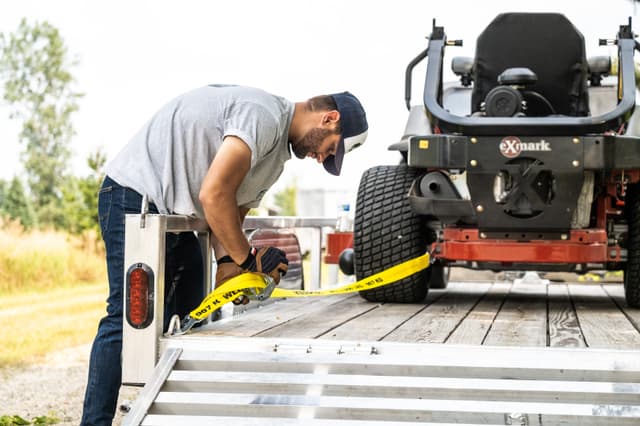
Whether you're taking your mower in for service, moving it to another property, or hauling equipment to the next landscaping job, properly securing a lawnmower is essential for safe transport. An unsecured mower can roll, shift, tip, or damage your truck, trailer, or other cargo—not to mention create a serious hazard for other drivers.
The good news? With the right tie-downs and a few simple techniques, transporting a lawnmower safely is quick and easy.
This guide explains how to secure push mowers, riding mowers, and zero-turn mowers in a pickup truck or trailer, including where to place straps, how to prevent movement, and which Keeper® tie-downs work best for the job.
Why Properly Securing a Lawnmower Matters
Unlike boxes or furniture, lawnmowers have wheels, uneven weight distribution, and exposed controls. During hard braking, acceleration, or sharp turns, they naturally want to roll or shift if they aren't properly restrained.
Properly securing your mower helps:
- Prevent movement during transport
- Protect your truck, trailer, and mower from damage
- Keep other motorists safe
- Meet cargo securement best practices
- Extend the life of your equipment by preventing unnecessary impacts
Whether you're transporting equipment across town or across the state, taking a few extra minutes to secure it correctly is well worth the effort.
Choose the Right Tie-Down for Your Mower
Not every lawnmower requires the same type of tie-down.
| Mower Type | Recommended Tie-Down | Keeper Product |
|---|---|---|
| Push mower | Cam buckle straps or light-duty ratchet straps | 1" x 10' Cam Buckle Tie-Down, 05105 |
| Self-propelled mower | Ratchet straps | KwikFeed Ratchet Tie Down 1"x12' 500 lbs., 43570 |
| Riding mower | Heavy-duty ratchet straps | 1.25"X16' Extreme Edge Ratchet Tie-Down, 1,000 lbs WLL, 43578 |
| Zero-turn mower | Heavy-duty ratchet straps with high working load limits | 1-3/4" x 15' High Tension Ratchet Tie-Down, 05521 |
As the weight of the equipment increases, so should the strength of your tie-downs.
For riding and zero-turn mowers, ratchet straps provide the tension needed to keep heavy equipment firmly in place throughout the trip.
Ratchet Straps vs. Cam Buckle Straps
Both styles secure cargo, but they serve different purposes.
Use Ratchet Straps For:
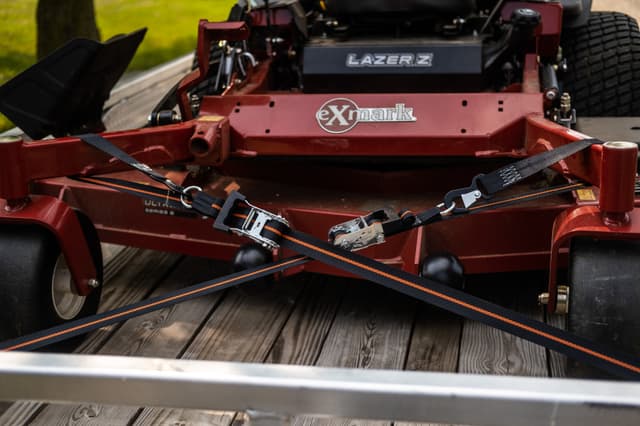
- Riding mowers
- Zero-turn mowers
- Long-distance transport
- Trailers
- Heavy equipment
Ratchet mechanisms allow you to apply significant tension, reducing movement and keeping heavier equipment secure.
Keeper® ratchet tie-downs are available in multiple capacities and feature durable webbing designed for demanding hauling jobs.
Keeper Innovation Spotlight: KwikFeed™ Ratchet Tie-Downs
Loading traditional ratchet straps can sometimes be frustrating, especially when feeding webbing through the spindle. Keeper's patented KwikFeed™ Ratchet Tie-Downs simplify the process with a slide-in design that makes loading faster and easier. Combined with oversized comfort grip handles and durable construction, they're an excellent choice for landscapers and homeowners who transport equipment regularly.
Use Cam Buckle Straps For:
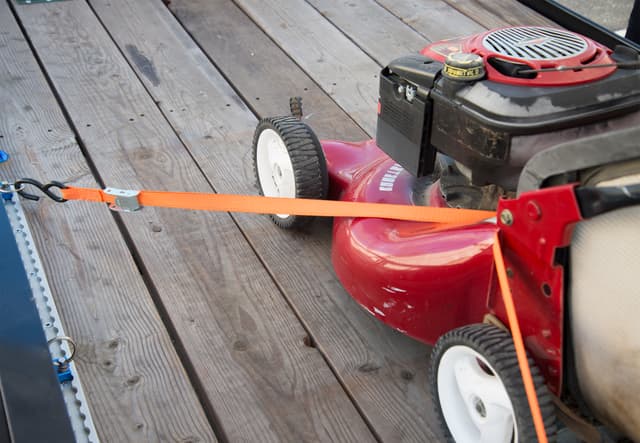
- Push mowers
- Lightweight equipment
- Short-distance transport
Cam buckle straps tighten by pulling the webbing through the buckle rather than using a ratchet. They're fast, easy to use, and less likely to overtighten lighter equipment.
Before You Load the Mower
A little preparation goes a long way toward safer transport.
Before loading:
- Remove loose tools and accessories.
- Empty grass collection bags if possible.
- Fold or secure adjustable handles.
- Check tire pressure on riding mowers.
- Inspect your straps for cuts, fraying, or damaged hardware.
If you're transporting a gas-powered mower, follow the manufacturer's recommendations regarding fuel levels and transport position.
Securing a Push Mower in a Pickup Truck
Push mowers are relatively lightweight but can still slide around inside a truck bed.
Step 1: Position the mower
Place the mower flat against the front of the truck bed whenever possible.
Step 2: Identify secure anchor points
Attach straps to the truck's factory tie-down points—not the bed rails or tailgate.
Step 3: Strap over the frame
Run one or two straps across the mower's solid frame or lower deck, making sure you have at least three points of contact along the mower.
Avoid:
- Engine controls
- Foldable handles
- Plastic covers
- Height adjustment levers
Step 4: Tighten
Use enough tension to eliminate movement without bending handles or damaging components.
Test the mower by pushing on it from several directions. It should not shift, and the straps should not loosen.
Securing a Riding Mower on a Trailer
Trailers provide more room but also allow more opportunity for movement if equipment isn't secured correctly.
Position the mower
Center the mower over the trailer axle for balanced weight distribution.
Engage the parking brake after positioning.
Use Wheel Chocks
Wheel chocks help prevent rolling while you're attaching straps. Although the tie-downs ultimately secure the mower, chocks provide additional stability during loading and unloading.
Secure Four Points
The safest approach is to use four ratchet straps, making sure that the combined working load limit of all 4 ratchet straps exceeds the weight of the mower.
Secure:
- Left front
- Right front
- Left rear
- Right rear
Attach straps to solid frame members or manufacturer-approved tie-down locations.
Never attach straps to:
- Steering components
- Mower decks
- Plastic body panels
- Seat frames
Cross the Rear Straps
Crossing the rear straps in an "X"-shaped pattern creates additional side-to-side stability.
This simple technique helps reduce shifting during turns and uneven road conditions.
Securing a Zero-Turn Mower
Zero-turn mowers often weigh several hundred pounds and have a higher center of gravity than push mowers.
The process is similar to securing a riding mower but requires extra attention to tie-down points and strap tension.
Best practices include:
- Four heavy-duty ratchet straps
- Wheel chocks during loading
- Even tension on all straps
- Attachment to the mower frame—not suspension or steering components
After tightening, the mower should remain stable without compressing components excessively.
Prevent Movement During Transport
The goal isn't simply to keep the mower from falling off the trailer—it's to prevent any movement at all.
Watch for:
- Rolling forward or backward
- Side-to-side shifting
- Bouncing over bumps
- Loose strap slack
After driving a few miles, stop and inspect the straps.
It's common for webbing to settle slightly after the first part of the trip. Re-tighten if needed before continuing.
Common Lawnmower Tie-Down Mistakes
Even experienced users make mistakes that reduce cargo security.
Avoid these common errors:
- Using worn or damaged straps
- Attaching straps to weak components
- Using too few tie-downs
- Forgetting wheel chocks during loading
- Leaving excess strap webbing loose
- Using bungee cords as primary tie-downs
- Failing to recheck strap tension after driving
Taking a few extra minutes to inspect your setup can prevent costly damage—or worse.
Why Bungee Cords Are Not a Substitute
Bungee cords are excellent for securing lightweight accessories like tarps, coolers, or blower tubes.
However, they should never be used as the primary means of securing a lawnmower.
Because bungee cords stretch, they cannot provide the constant holding force required to restrain heavy rolling equipment during sudden stops or emergency maneuvers.
For lawnmowers, ratchet straps remain the safest and most reliable option.
Choose Keeper® Tie-Downs for Lawn Equipment
Whether you're a landscaping professional transporting equipment every day or a homeowner taking your mower in for seasonal service, Keeper offers cargo securement solutions designed to make hauling easier and safer.
Features found across Keeper's premium ratchet tie-down lineup include:
- Patented KwikFeed™ drum for faster, easier strap loading
- Oversized ratchet handles for better grip while tightening, even when wearing gloves
- ExtremeEdge™ webbing 30% more cut resistant and 67% more abrasion resistant due to its patented reinforced edges
- Weather-resistant construction for dependable outdoor performance
- Multiple lengths and working load limits to match every need from push mowers to commercial zero-turn equipment
With the right equipment and proper tie-down technique, you can transport your lawnmower with confidence every time.
Frequently Asked Questions
- How many straps do I need to secure a riding mower?
- For most riding and zero-turn mowers, use four ratchet straps—one at each corner—to help minimize forward, rearward, and side-to-side movement. Make sure the combined working load limit of the straps exceeds the total weight of the mower.
- Can I transport a push mower with cam buckle straps?
- Yes. Cam buckle straps are suitable for most push mowers when they're in good condition and properly tightened. Heavier self-propelled mowers may benefit from light-duty ratchet straps.
- Should I use wheel chocks?
- Wheel chocks are recommended when loading and securing riding or zero-turn mowers on trailers. They help prevent rolling while you attach your tie-downs.
- Can I use bungee cords to secure a lawnmower?
- No. Bungee cords are designed for lightweight accessories and should never replace ratchet straps when securing heavy rolling equipment.
- How tight should ratchet straps be?
- Ratchet straps should be tight enough to eliminate movement without damaging the mower or over-compressing its components. Always check strap tension shortly after beginning your trip and re-tighten if necessary.